Perspectivas is edited by
SUMMARY
Focus and scope
Section Policies
Access and Reuse Policies
Interoperability Policy
Digital Preservation Policy
Arbitration Process
Cases of Controversy
Periodicity
Good Practices: Anti-plagiarism policy, Redundancy, Conflicts of interest.
Policy on corrections, errata and retractions
Artificial intelligence use policy: authorship, review, editing.
__________
FOCUS AND SCOPE:
Perspectivas, Journal of History, Geography, Art and Culture, is the organ for the dissemination of scientific, artistic and humanistic works, edited by the Rafael María Baralt National Experimental University (UNERMB).
The objective of the journal is to disseminate research that covers HISTORY (General History, National, Regional, Local, Current, Oral, Didactics of History and other trends in the historical discipline), GEOGRAPHY (Physical, Human, Social, Cultural, Local, Didactics of Geography, as well as other currents of geographical knowledge), ART (Fine Arts, all types of artistic manifestations, museology, Popular Art, among others) and CULTURE (Cultural manifestations, Popular traditions, Sociological, anthropological perspectives, economic and psychological aspects of cultural processes); including in these topics the innovations that are generated at a technological level for intellectual production of impact. Research, essays, documents and reviews of books and journals are published. All collaborations are evaluated by an arbitration committee.
The journal is aimed at the academic and scientific community of the human and social sciences and those interested in delving deeper into the topics, debates and experiences that are the protagonists of our regions, subjects and their socio-cultural transformations.
SECTION POLICIES:
DOSSIER
 Open Submissions
  Indexed
  Peer Reviewed
ARTICLES
 Open Submissions
  Indexed
  Peer Reviewed
ESSAYS
 Open Submissions
  Indexed
  Peer Reviewed
REVIEWS
 Open Submissions
  Indexed
  Peer Reviewed
INVESTIGATION
 Open Submissions
  Indexed
  Peer Reviewed
INTERVIEW
 Open Submissions
  Indexed
  Peer Reviewed
ACCESS AND REUSE POLICIES
Perspectivas, Journal of History, Geography, Art and Culture, provides open access to its content, based on the principle of offering the public free access to research, helping to promote greater global exchange of knowledge. In this sense, all Perspectivas publications are free of fees or any economic cost. Perspectivas does not have an editorial policy that authors must pay or cover any cost to publish in this journal.
Regarding copyright, the authors assign to Perspectivas the rights of publication and dissemination of the articles under the Creative Commons (Attribution-NonCommercial-ShareAlike 4.0 International). Therefore, the journal can publish them in different formats and disseminate them in databases, libraries and the like at a national and international level. Likewise, the author is recommended to write with the greatest possible rigor; However, the Editorial Committee may make any editorial changes it deems appropriate to give the article the greatest clarity possible.

that means:
BY-Attribution — You must give appropriate credit, provide a link to the license, and indicate if changes were made. You may do so in any reasonable manner, but not in such a way as to suggest that you or your use are endorsed by the licensor.
NC: NonCommercial — You may not use the material for commercial purposes.
SA: ShareAlike — If you remix, transform, or build upon the material, you must distribute your contributions under the same license as the original.
For more information: https://creativecommons.org/licenses/by-nc-sa/4.0/
INTEROPERABILITY POLICY
All publications of Perspectivas, Journal of History, Geography, Art and Culture, incorporate interoperability protocols that allow their content to be collected by other distribution systems, such as digital repositories. The journal is published through OJS (Open Journals System 3.3.0.14), system that incorporates the OAI-PMH (Open Archive Initiative-Protocol) interoperability protocol for Metadata Harvesting ), with the possibility of obtaining different formats for the metadata.
OAI-PMH : https://perspectivas.unermb.web.ve/index.php/Perspectivas/oai?verb=Identify
In the case of the CLACSO digital repository , the Dublin Core record is shown at: https://biblioteca-repositorio.clacso.edu.ar/handle/CLACSO/253401
Likewise, the Journal has the Latin American Repositories Network, which uses the Open Archives Initiative's protocol. protocol for Metadata Harvesting (OAI-PMH), V.2, allowing interoperability between different servers and repositories. The Network updates the documentation periodically, available at https://repositorioslatinoamericanos.uchile.cl/handle/2250/5209480
Protocol : OAI-PMH Version 2.0
Metadata format : Dublin Core
DIGITAL PRESERVATION POLICY
Perspectivas, Journal of History, Geography, Art and Culture, ensures the intellectual content of electronic documents, for long periods of time, through digital preservation methods to safeguard digital resources, maintaining their attributes such as integrity, authenticity, inalterability, originality, reliability and accessibility.
The “Rafael María Baralt” National Experimental University guarantees the recording of the digital content of the Journal and copies it (rejuvenation) weekly, on the institutional servers, through the cpanel with the JetBackup 5 application, which allows the storage and restoration of files. This application uses a system to control the integrity of the data through redundancy algorithms, thus verifying that the data is maintained as it has been recorded. The preservation procedure is as follows:
In addition to institutional digital preservation, the journal is in the CLACSO digital repository: https://biblioteca-repositorio.clacso.edu.ar/handle/CLACSO/248506
OJS 3.3.0.14 allows the CLOCKSS system to store, preserve and distribute the journal's content through its publishing manifest , available at:
http://perspectivas.unermb.web.ve/index.php/Perspectivas/gateway/clockss
The LOCKSS digital preservation system, on the PKP PNL network, also guarantees the storage, preservation and distribution of the journal's content through its publication manifest, available at:
http://perspectivas.unermb.web.ve/index.php/Perspectivas/gateway/lockss
ARBITRATION PROCESS
All works will be evaluated under a double-blind modality by an Arbitration Committee, made up of three (3) members of the Editorial Committee and two (2) specialists of recognized prestige, selected by the Editorial Committee of the journal, external to the “Rafael María Baralt” National Experimental University. The proposed works must be original, unpublished and cannot be simultaneously submitted to the evaluation and arbitration process in another journal. The originals of the proposed articles will not be returned.
With the evaluation of the referees using the double-blind method, the confidentiality of the process is ensured, the identities of both the referees and the authors are kept confidential. The evaluation criteria are the following:
a.- Formal or presentation criteria : 1) originality, relevance and adequate length of the title; 2) clarity and coherence of speech; 3) adequate preparation of the summary; 4) internal organization of the text and 5) all other criteria established in these regulations.
b.- Content criteria: 1) evidenced domain of knowledge; 2) scientific rigor; 3) theoretical and methodological foundation; 4) timeliness and relevance of the sources consulted and 5) contributions to existing knowledge.
Once received, the works follow the following process, in an average time of 90 days: a) initially, receipt of the manuscript is acknowledged via email; b) Next, the Editorial Board carries out a preliminary review (estimated time 15 days) to determine if it complies with the Standards for the presentation of works; b) if it meets them, it goes to arbitration (review of manuscripts, estimated time 30 days), a process in which qualified specialists evaluate the works according to and meeting criteria of relevance, originality, contributions and scientific and academic virtue. The Arbitration Committee will issue a verdict on the work presented, which will consist of: b-1) Publishable. b-2) Publishable with slight modifications, which involve those of form and style, in order to adapt the formal or presentation criteria of the journal. b-3) Publishable with substantial modifications, which imply those of the background and construction of the manuscript, in order to adapt to the content criteria of the journal. b-4) Not publishable. c) if the work does not meet the minimum criteria present in these standards; In this sense, the Editorial Board will propose that it not be sent to the arbitration process; d) in any case, the author or authors will be notified, in writing, of the decision.
The authors will have a maximum of twenty-one (21) days to send the modifications to the Editorial Committee to the following email: perspectiveunermb@gmail.com. If these corrections are not sent within the established period, it is assumed that the authors are disinterested in not publishing their work in Perspectivas, Journal of History, Geography, Art and Culture. If the author(s) decide not to publish their work, they must present a communication in which they make clear the non-publication of the submitted material in the journal.
In the event that the verdict of the referees differs from one another (publishable/non-publishable), the article will be submitted to a new arbitration until a unanimous decision is obtained.
The responsibility for the arbitration process and the final decision to publish the articles falls on the Editorial Board, in the figure of its Director.
CASES OF CONTROVERSY
The Journal undertakes to resolve cases of controversy through the Editorial Committee in cases in which the peer evaluators indicate that they have a conflict of interest with the text to be evaluated. The journal guarantees that the most suitable evaluators will also be chosen in terms of thematic and academic compatibility. In cases of doubt, the Editorial Committee will always be consulted to resolve these cases.
PERIODICITY
Perspectivas, Journal of History, Geography, Art and Culture is a biannual journal. It is published twice a year electronically. Its publication is carried out covering the months of January-june and July-december.
GOOD PRACTICES
Anti-plagiarism policy: Plagiarism involves the non-originality of the works constitutes the action of copying complete works of others and attributing authorship thereof; as well as, taking ideas and texts without mentioning the original source. These actions are considered inappropriate behavior, which may give rise to sanctions, such as a temporary or permanent ban on authors from publishing in Perspectivas, Journal of History, Geography, Art and y Culture, depending on the severity of the case. Therefore, “that scientific, artistic, literary or any other genre work that results from the inventiveness of its author” is considered original, according to the definition of the Royal Spanish Academy.
To make anti-plagiarism policies effective, the Journal takes the following measures:
The following online program alternatives are offered for authors to analyze their works before submitting them and attach the generated report: Plagiarim Detector, Copyscape, Plagium, DupliCheker.
Redundancy: Work derived from the same initiative project will not be considered “redundant” to the extent that the question or aspect raised is different. The approach to data, aspects not considered in previous works (a stage of greater progress or definitive results), the application of the same methodology in other spaces, greater reflection on an aspect previously addressed. In the event of the existence of previous works derived from the same project, they must be cited (failing to do so will be considered plagiarism or “self-plagiarism”) and, likewise, clarify the existing differences with respect to the work presented for evaluation by means of an explanatory note.
The works sent to the journal must be original and unpublished, unless it is clearly stated that a work is being republished with the express knowledge of the author and the editorial team of the journal or publication, prior approval of the Perspectivas Editorial Committee. Work will not be accepted that has been written on information that has already been discussed at length in a previous publication, or that is part of material already published in any medium (print or electronic). Only those articles that have been rejected by other journals, or that are based on a preliminary publication (a summary published in conference proceedings, a poster or an extensive refereed report at a scientific event) will be considered.
Conflicts of interest: Authors must disclose in their manuscript any financial or other conflict of interest that could influence the results or interpretation of their work. Examples of potential conflicts of interest that should be described include employment and salaries, consultancies, stock ownership, paid expert testimony, and grants or other funding that is directly related to the research performed. It is therefore necessary for authors to report, preferably as an author's note in the submitted material, any possible conflicts of interest in the research work.
POLICY ON CORRECTIONS, ERRATA AND RETRACTIONS
Perspectivas is committed to the community to generate the corrections, errata and retractions that are necessary; guaranteeing transparency in these processes and reporting any case that is subject to review, at the request of the Editorial Team, authors, readers and institutions. In the event of detecting voluntary or involuntary errors, as well as demonstrable ethical problems, the issuing entity will mention the reasons and the basis for the retraction, and will send the respective request via email. The Editorial Committee will carry out an exhaustive review and will initiate the corresponding process, as appropriate. This, in accordance with the COPE Retraction Code. The final decision on the retraction of the publication falls on the Editor in Chief of the Journal.
Corrections and errata: corrections are made when small errors are detected, plagiarism in small sections, committed by the author, in parts of an article. In the event of an error in the edition or production caused by the journal, an errata is issued. In both cases, the retraction will be published in the following issue if it significantly affects the content and understanding of the document.
Retraction: The Journal issues a retraction in published articles, in seriously flawed cases in which the findings are not reliable, simultaneous publication in another journal and a substantial amount of information previously published. The retraction notice will be published in the issue following the retraction and will be included in its table of contents. The guidelines are established according to the COPE flow chart. The objective is to guarantee the integrity of the literature.
In case of disputed authorship, after publication, the authors will present the appropriate evidence and request a retraction; if appropriate, the correction is published in the list of authors or collaborators. The guidelines are established according to the COPE flow chart for this purpose.
ARTIFICIAL INTELLIGENCE USE POLICY
Perspectivas, a journal of History, Geography, Art, and Culture, aligns itself with the Committee on Publication Ethics (COPE) and the Heredia Declaration, which recognize the responsible use of Artificial Intelligence (AI) in research processes as a support tool whose use must be evidenced and made transparent for a clear, traceable, and reproducible exercise of knowledge. Among the aspects considered in the Heredia Declaration regarding the different roles in the editorial process are:
Authorship
The role of authorship is exclusive to human beings, who create, make decisions, and assume responsibility for the works generated. AI tools (language models, chatbots, generative AI) cannot be listed as authors or co-authors, since they do not fully assume these responsibilities, nor are they responsible for the existence or absence of conflicts of interest, nor do they manage copyright or usage licenses for the works.
Authors must explicitly declare whether or not they use AI in their research and scientific writing processes at any stage of the scientific publication process. Failure to do so may result in the rejection or retraction of the publication.
If AI is used, the declaration must be included at the end of the document, specifying:
- The AI model used, its version, and the date of use.
- Specific tasks performed in each section of the document with human review: improving writing, grammar correction, style, text translation, generation of images, tables, graphs, and any other resources.
- Methods for verifying and validating the results generated by the AI, as well as the authors responsible for this process: data, citations, tables, translations, etc.
Authors are responsible for any violation of editorial ethics; therefore, they must ensure that the use of AI does not infringe on the rights of third parties or violate licenses or terms of service.
Review
The responsibility for the criteria used to recommend or not the publication of a scientific text—or to propose corrections and improvements—lies with the reviewer. Interaction with AI does not replace their expert judgment or accountability.
When AI has been incorporated as a complement to the review process, it is necessary to inform the editorial team and, through them, the authors. Indicating, at a minimum, the model name, version, date of use, and the evaluation instructions is part of a transparent and traceable content evaluation process.
Reviewers must be able to explain their interaction with AI, what input they received, and how much of that input was considered in the observations, comments, recommendations, and correction requests they issued as evaluation criteria for the scientific text.
Editing
The editor and the editorial team are responsible for the editing process. The use of AI should not replace human responsibility or accountability when performing editing tasks or monitoring the actions of reviewers and authors. The editing of scientific texts should not depend on the use of AI.
Editors will provide evidence when they have used AI at any point in the editorial process. The model name, version, date of use, and assigned task will be reported.
Prevention strategies will be established to avoid the spread of bias, misinformation, or situations where respect for or ethical handling of personal data cannot be guaranteed. Furthermore, the use of open, high-quality, reliable data, supported by consent or authorizations that allow AI to make legitimate use of such information, will be promoted.
Authors and readers will be informed when, in the interest of transparency, editorial or review tasks have relied on the use of AI.
NOTE: Authors, reviewers, and editors are solely responsible for reviewing, verifying, and correcting any AI-generated results to avoid bias, errors, or falsehoods. Maintaining objectivity and editorial quality is recommended
Perspectivas is edited by
Present to share with you our intellectual productions
Perspectivas is governed by the principles of Diamond Open Access: Towards Science as a Global Public Good. That's why we're part of the Redalyc Scientific Information System.

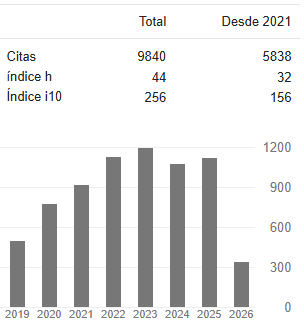
Métricas Google Scholar


294 record