We are in AmeliCA
2024-07-10
AmeliCA collaborative initiative to promote and strengthen the development of Open Science.
Read more about We are in AmeliCA
Perspectivas promotes science as a common and public good; we are now indexed in Redalyc
Perspectives. Journal of History, Geography, Art and Culture (ISSNe-2739-0004) is the organ for the dissemination of works (scientific, artistic and humanistic), edited by the Rafael María Baralt National Experimental University (UNERMB), its biannual publication covers HISTORY (General, national, regional, local, current, oral history; didactics of history and other trends in the historical discipline), GEOGRAPHY (Physical, human, social, cultural and local geography; didactics of geography , as well as other currents of geographical knowledge), ART (Fine arts, all types of artistic manifestations, museology, popular art, among others) and CULTURE (Cultural manifestations, popular traditions, sociological, anthropological, economic and psychological perspectives of the processes cultural); including in these topics the innovations that, at a technological level, are generated for intellectual production of impact. Research, essays, documents and reviews of books and journals are published. The works presented in the journal are evaluated by a committee of specialists in the area, under a double-blind modality.
Perspectives is aimed at academic and scientific communities and those interested in delving deeper into the topics, debates and experiences that address the aforementioned issues, both nationally and internationally.
AmeliCA collaborative initiative to promote and strengthen the development of Open Science.
Read more about We are in AmeliCA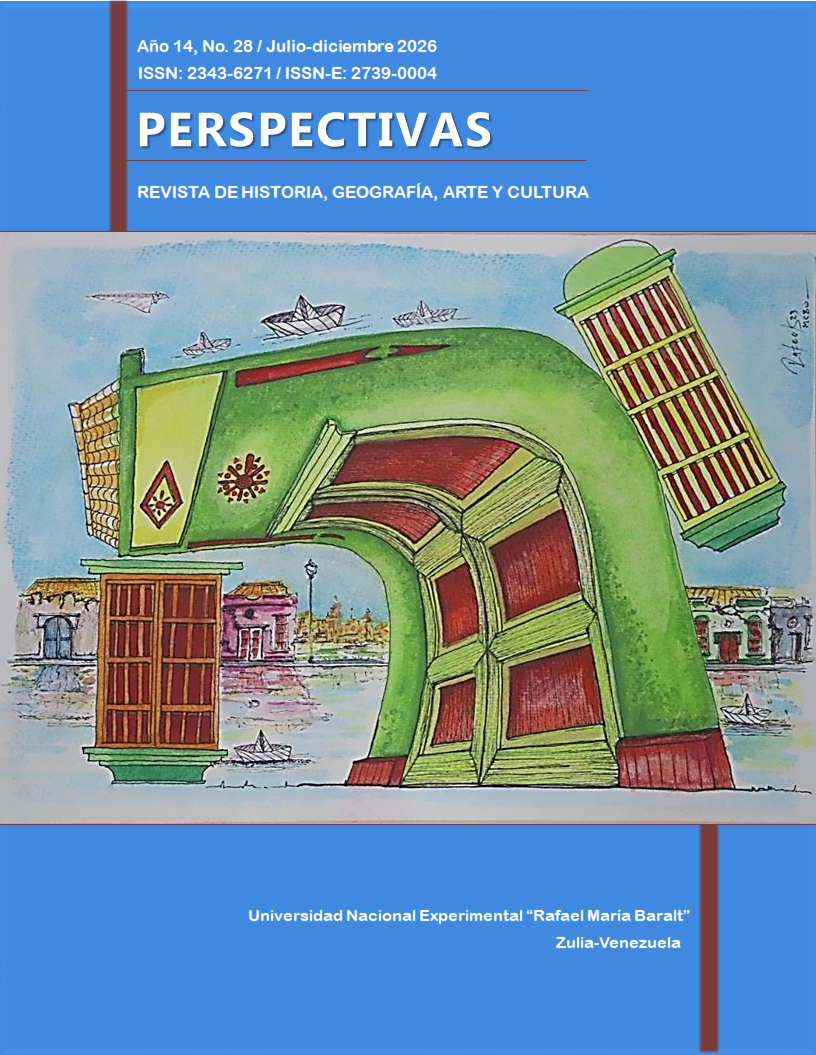
In this issue, *Perspectivas*, a journal of history, geography, art, and culture, presents a series of works framed within the dynamics of art and culture at the dawn of the 21st century, reflecting a humanity caught between technological fascination and existential urgency; although there may be much mistrust, far from dehumanizing us, these new aesthetic languages are serving as a critical mirror of our contradictions. In a fragmented and hyper-fast-paced world, the cultural phenomenon continues to fulfill its oldest and most fundamental mission: to safeguard our capacity for wonder, to build bridges of empathy, and to remind us that, regardless of the medium or algorithm, the need to tell the story of who we are remains the beating heart of our species.

Perspectivas es edited by

Present to share with you our intellectual productions
Perspectivas is governed by the principles of Diamond Open Access: Towards Science as a Global Public Good. That's why we're part of the Redalyc Scientific Information System.

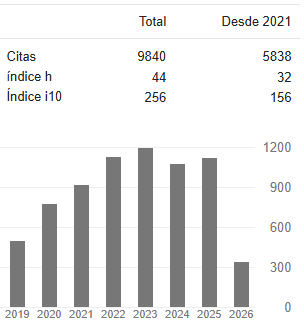
Métricas Google Scholar